
School History
1800s
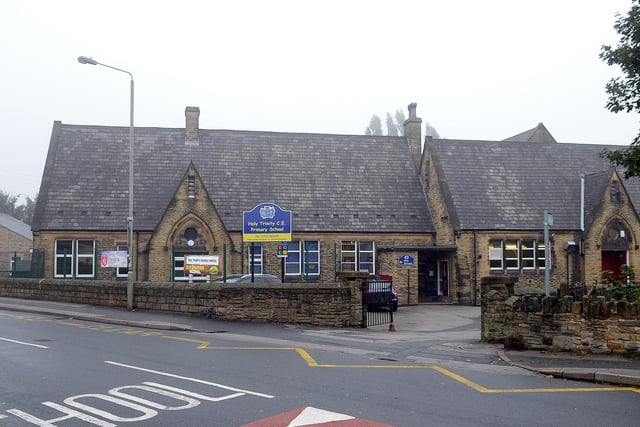
One clue to the history of Holy Trinity School on Church Street, Ossett, is on a foundational stone at the front of the school building which is inscribed with the following:
“Laid by the Right Revd
William Walshaw How, D, D
Lord Bishop of Wakefield July 13th 1894
when the schools were enlarged.”
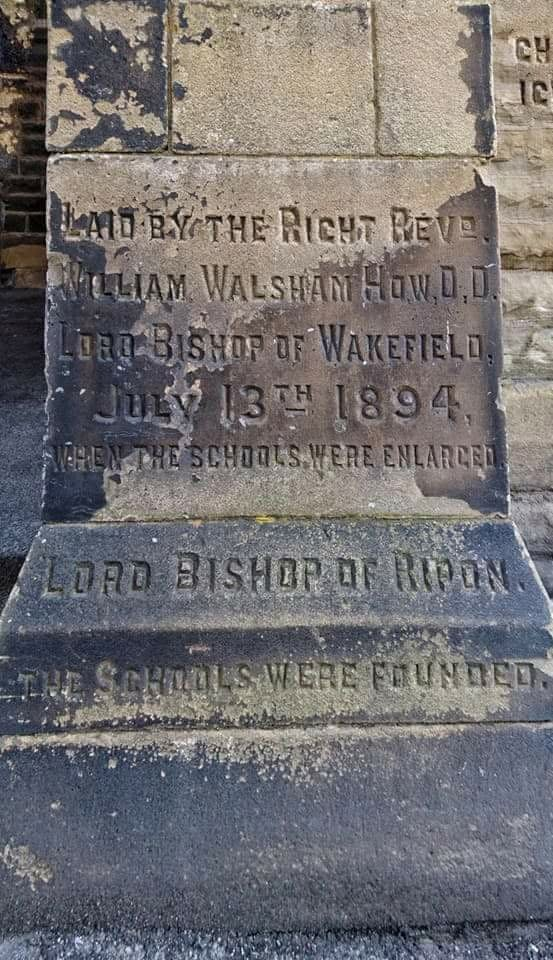
There were actually two schools at this time, one infant and one junior, sitting side by side.
The enlargement of the schools caught the attention of the press and on February 20th 1895 this article appeared in the Leeds Mercury Newspaper.
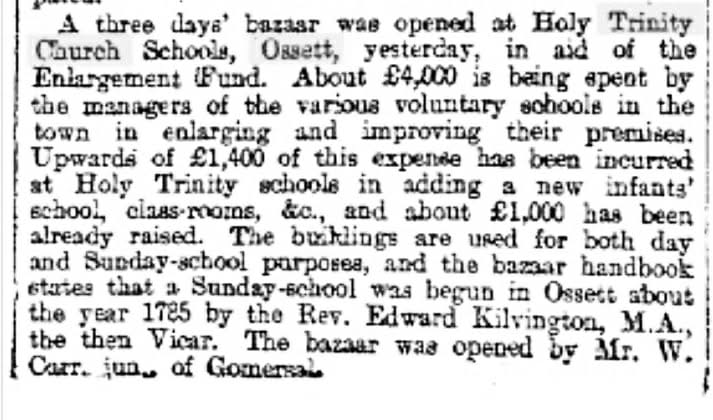
It isn’t clear from this article whether this first Sunday School was held on the site of the current school or not, but we have definitive evidence from the school archives that there was indeed an Ossett Holy Trinity Sunday School in existence from 1852. The school has original registers and details of monies paid to the Holy Trinity School sick club with the earliest books dating back to this year. Members paid into the club and could draw on it in cases of illness or for funeral costs. Members of the club had to be current or former pupils of the school.
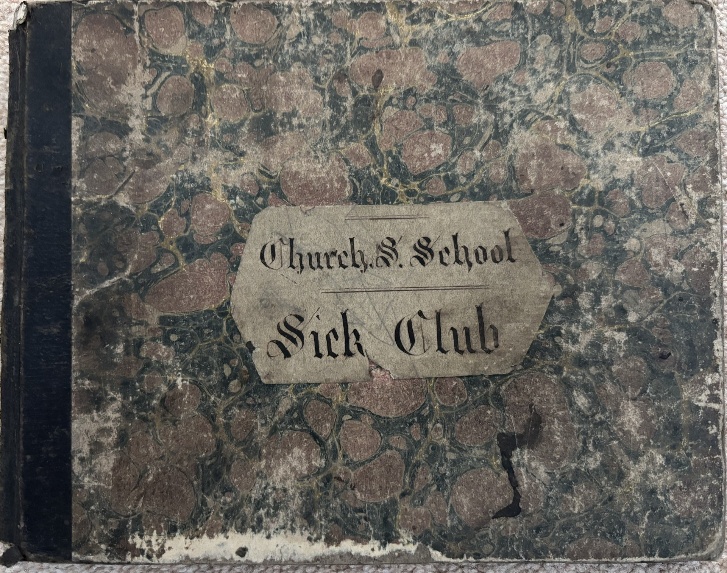
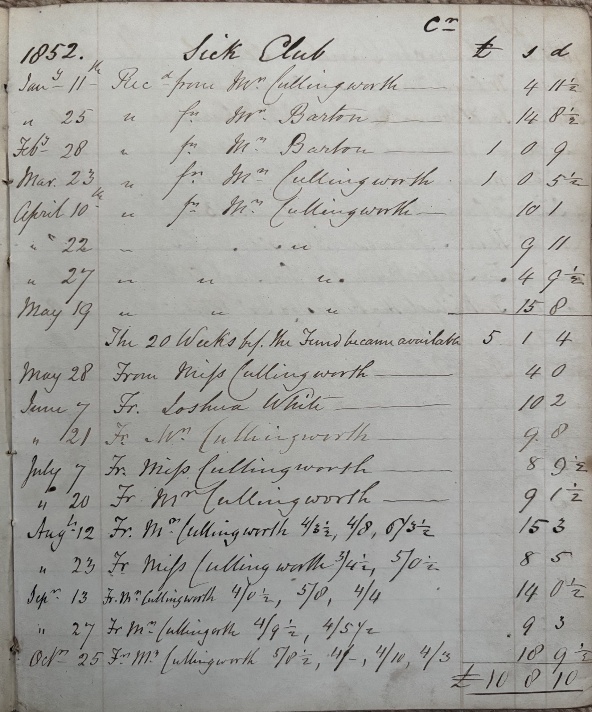
(Courtesy of Holy Trinity Primary School)
William Thomas Gadie was a headteacher of the school, and his wife’s sister Julia was a teacher. Later his wife Georgiana (nee Asquith) would also teach there. (source: Ossett Through the Ages).
At the time of the enlargement of the two schools in 1895 they were still used for both day and Sunday school purposes. It wasn’t until the early 1900s that education became the responsibility of the local Corporation.
Early 1900s
Therefore in the early 1900s the transition was made at the Holy Trinity Schools to a purely “day school”, somewhat separating the religious and the secular learning for the pupils, although to this day the school remains a Church of England Aided School with a thriving Christian ethos and close ties with the nearby church.
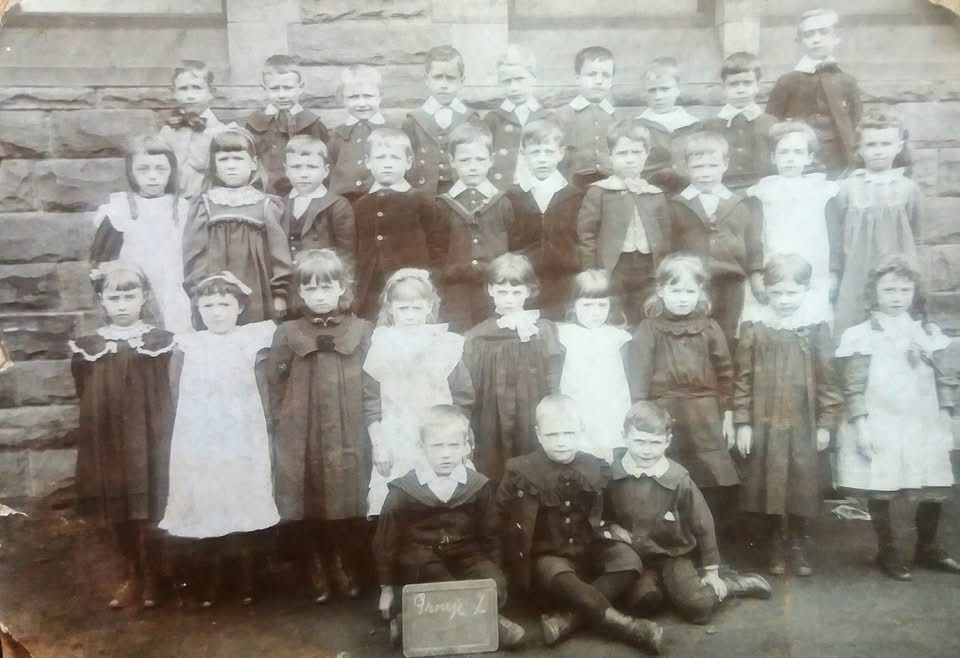
Holy Trinity School 1901 (courtesy of OTTA)
The photo of the school (below) was taken by Norman Gee and is thought to have been taken some time between 1918 and 1923.
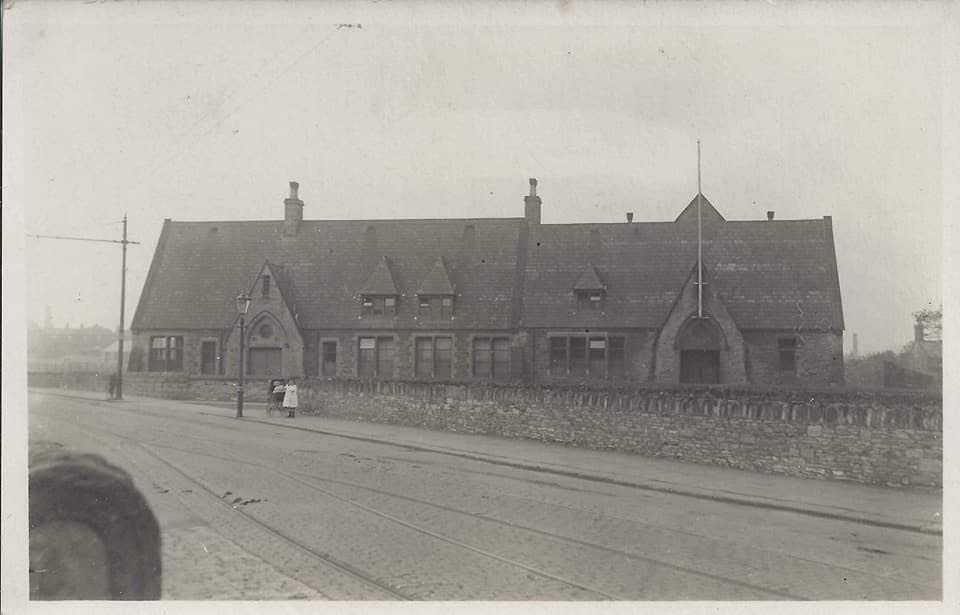
(Courtesy of John Dales and OTTA)
1930s-1960s
JN Abbott recalled
"I was born in 1934 and, therefore, was just starting school in 1939, the outbreak of World War II. I remember in this first year we used to have a sleep in the afternoons due to missing sleep at night due to the air raids.
I lived up Fields Lane and went to the local Holy Trinity School just across the road.
As I grew older and the war progressed, we got quite a few air raid siren warnings when we had to go outside to the air raid shelter, which we shared with the next door. We had to stay there sometimes 1-2 hours until the 'all clear' siren was sounded.
As a consequence of this, a scheme was evolved that if the siren went at, say, 1.00 am and lasted one hour, we didn't have to go to school until 10.30 am the following day to compensate for loss of sleep.
I remember this happened on one occasion and according to the 'older boys' up the street, it should be a 10.30 am start. There was a large area of land at the top of the street which we used as a play area as the building of houses was stopping at the outbreak of the war. All was going well until up the street strode the very well-respected Headmaster of Holy Trinity, Harold Moss J.P. "All the rest of the school had turned up" he said. "Go and tell your parents you are going straight to school".”
(As told by JN Abbott to the BBC via staff at Ossett Library.)
On the 1939 England and Wales National Register, a Mr Clifford Horner was listed as an assistant school master. He taught at Holy Trinity Junior school for many years and went on to become the headteacher of the Junior School with Mrs Flesher the headteacher of the Infant School. He took over from Mr Moss. (Memories posted on OTTA) This photo is of Mr Horner and children in the 1960s.
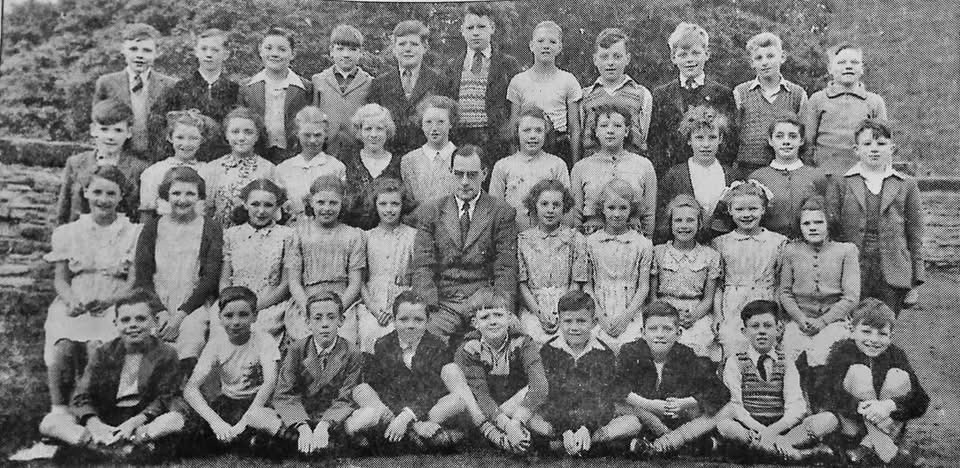
Personal recollections of Mr Horner say that he had a pronounced limp and was very strict – like most teachers at that time. (Information from OTTA Facebook Group)
1960s-1990s
Mr Bowers took over from Mr Horner as headteacher of the junior school, and the headteacher of the Infants school was Mrs Bastow.
Mrs Margaret White (now Robinson) started work at the school in 1984 when Mr Bowers and Mrs Peace were heads, having previously worked at South Ossett Infants School for 10 years.
“Mr Bowers was a good and gentle man and was well liked. He was also the organist at St John’s church at Horbury Bridge which he delighted in.
When I started work at Holy Trinity in 1984 Mr Bowers was the headteacher. I had known him for a long time – he used to work at Horbury Town Hall, and as a schoolgirl I walked down with him as I walked to school. (Memories from Margaret White, now Robinson)
After Mr Bowers was taken ill and retired, the two schools were amalgamated and Mrs Peace was appointed headteacher, having previously been the headteacher of the Infants School. Mrs Peace became the first headteacher of the combined “Holy Trinity Junior and Infant School”.
Mrs Peace was a headteacher who was well loved by pupils and parents alike. She retired in 1994, below is a photo from the local newspaper of Mrs Peace on her retirement.
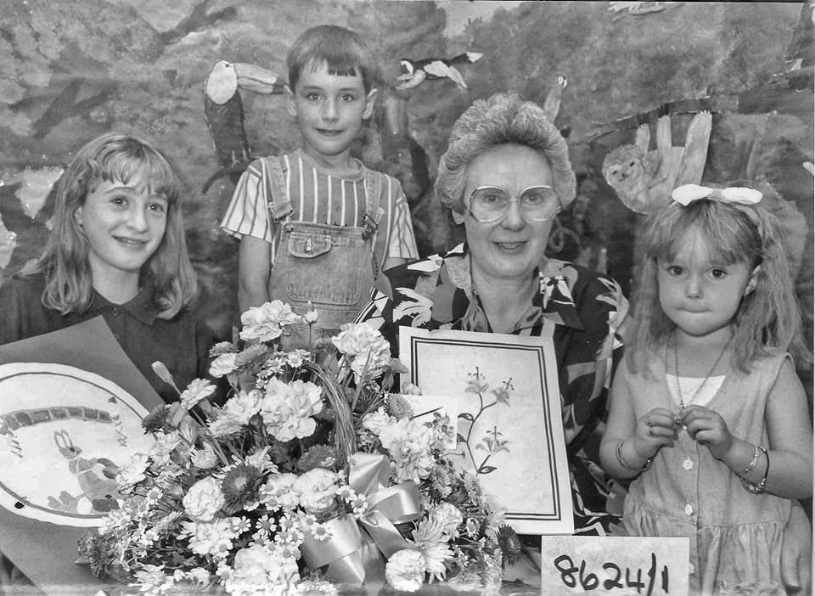
Here are a couple of personal memories of Mrs Peace:
“Lovely caring lady, I remember being upset at school over the loss of my pet and she let me have lunch in her office and showed me a book of someone losing a pet and how they moved on.”
“I remember Mrs Peace. She was so kind. When I was angel Gabriel for the nativity, I remember it was so cold she took me into her office and made me tea and biscuits. When we went carol singing, we always used to go to her house.”
(Courtesy of OTTA)
Early 2000s
Mr Mike Turton became the Headteacher of the school after Mrs Peace.
In 2004, Croft House Nursery in Ossett closed down and several schools started their own nursery class including Holy Trinity.
After the nursery class was formed, The Junior, Infant, and Nursery merged into one Holy Trinity Primary School that it is today.
The school building was adapted and enlarged by adding a new Foundation Unit with purpose-built classrooms for Nursery and Reception classes. The old Infant playground became more new classrooms and offices, and one of the oldest classrooms at the front of the school became the main school office, meaning that the entrance was now back at the front of the school on Church Street.
History of the school researched and compiled by Mrs Alison Boome, Wakefield Heritage Network.